
Getting Liberty County Court Records
One office covers four courts. The Liberty Clerk of Courts serves Superior, State, Juvenile, and Magistrate courts. Its Judicial Division stores and retrieves both civil and criminal files. Probate records stay with Probate Court. Each municipal court keeps its own ordinance and city-traffic files. For any of the four unified courts, begin with Tyler CM Web Search. A free register result can identify the case and event. But it is not a certified file.
Every route works. You can search Tyler online. You can also use a public terminal or visit the counter in Suite 1200 at 201 South Main Street in Hinesville. Phone requests go to 912-876-3625, and email to clerk@libertycountyga.gov. Mail is an option too. Official pages list different mailing and fax details, so confirm those first. Eligible certified documents may also go through eCertification. PeachCourt and Tyler/JusticePlus handle filing, not copy requests.
- Identify the court, case number, party, filing date, and document.
- Check the public register or ask clerk staff to locate the file.
- State whether inspection, a plain copy, or certification is needed.
- Confirm access, retrieval time, format, and the current quoted fee.
- Pay through the approved channel and retain the receipt.
Liberty Court Record Layers
Three layers trip people up. A docket is the chronological list of events, settings, filings, and outcomes. The filed paper is the item an entry names. Examples include a complaint, motion, order, judgment, transcript, or exhibit. A certified copy is a clerk-authenticated version, used when a plain printout will not do. Liberty's online docket coverage runs wider than its public image set.
Docket or register A public index of case activity. Filed document The paper or image behind an entry. Certified copy A copy authenticated by the clerk.
Sometimes Tyler lists an event but no image. Give the Judicial Division the case number, event title, and filing date. That narrow request lets staff pull the right paper and quote the right cost.
Liberty County Court Record Types
Each court keeps its own slice of the county's caseload. Superior Court holds major civil cases. It also handles domestic matters, divorce, equity, felony indictments, and related orders. State Court handles countywide misdemeanors plus civil cases within its authority. Magistrate Court maintains warrants and preliminary matters. Its civil claims generally run up to $15,000. Probate Court, a separate office, keeps estates, guardianships, conservatorships, marriage, and weapons-carry matters. Juvenile Court records are confidential. They stay outside ordinary public access.
- Docket sheets, calendars, and case-event histories
- Complaints, answers, motions, pleadings, and subpoenas
- Signed orders, judgments, sentences, and dispositions
- Appeal notices, filed transcripts, and remittiturs
- Probate and municipal files held by separate custodians
The clerk’s official forms index shows the range of court and restriction forms available.
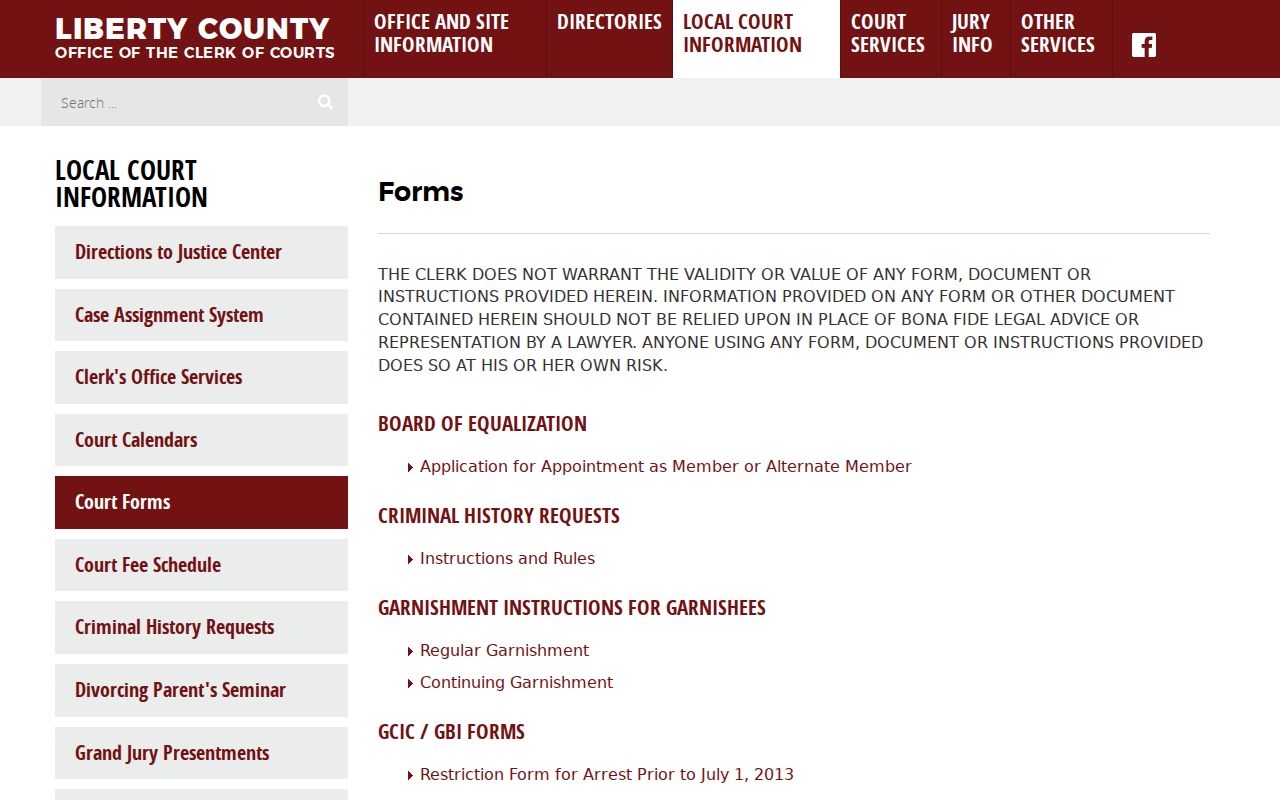
The index can point you to a form, but it cannot turn every case-file request into a web form.
Liberty Certified Copy Workflow
A plain copy just reproduces the record. A certified copy carries the clerk's authentication. Ask your recipient which one is required before you pay. For eligible electronic records, use the GSCCCA eCertification workflow. It starts with an account and a new request. Select Liberty County and the document type, fill in the required fields, and submit. The clerk processes it. Then you authorize final payment, and an emailed link delivers the tamper-evident PDF.
The clerk posts no single eCertification fee or completion time. When you know the exact paper, a counter request is often simpler. A criminal disposition request must name a specific case and defendant. Liberty will not run generic criminal-history searches.
Ask before ordering: Say “plain” or “certified,” identify the exact filing, and confirm the fee and delivery method with the custodian.
Inside a Liberty County Court Record
What's inside depends on the case type. Georgia's register rules show the range. A civil file can track the action number, parties, lawyers, cause of action, service, costs, pleadings, trial status, disposition, judgment, appeal, and storage references. A criminal register can include the indictment or accusation number, charges, classification, plea, hearings, motions, sentence, fines, restitution, warrants, appeal events, and the citation number when traffic is involved.
| Case identity | Case or action number, court, parties, and filing date |
|---|---|
| Filed papers | Pleadings, motions, responses, exhibits, and filing dates |
| Settings | Hearing type, judge, date, time, and remarks when published |
| Outcome | Disposition, plea, dismissal, judgment, sentence, or transfer |
| Later activity | Transcript filing, appeal notice, remittitur, and storage reference |
Not every field shows up in every matter. A docket can confirm a filing even when the public cannot open its image.
Why Liberty Record Images Vanish
A missing image does not mean no record exists. The matter may be juvenile, sealed, restricted, or held by Probate or a municipal court. It may be too old for the online layer. Or it may be indexed under a different spelling or number. Images with birth dates, Social Security numbers, or financial account data face tighter access. Search name variants and confirm the court. Then ask the office whether the paper can be inspected or copied.
Older Liberty County court records may live in bound books, microfilm, off-site boxes, or another storage system. Give staff a narrow year, court, case-number range, and document description. Retrieval beyond the published threshold can add staff cost. A focused request saves time and cuts uncertainty.
Fees and Certified Copies
Liberty publishes several record costs, and they differ by court and format. The 2024 Superior and State schedule is a reference point. The current county fee page controls many Magistrate transactions. Two official sources list different staff-retrieval rates. So confirm the live figure before relying on either. Credit cards may be accepted with a surcharge for copies and some services. Court-ordered criminal fines follow separate payment rules.
| Liberty record item | Published amount |
|---|---|
| Magistrate plain copy | $1.00 per page |
| Magistrate certified copy | $2.50 first page; $0.50 each added certified page |
| Magistrate electronic or faxed copy | $2.50 first page; $1.00 each added page |
| Magistrate audio recording | $10 per case |
| Specific criminal disposition | $1.00 per page; certification separate |
| Search or retrieval over 15 minutes | $19.01 per request on one page; a 2026 policy lists $17.84 per hour |
The Liberty fee landing page is the source to check before payment.
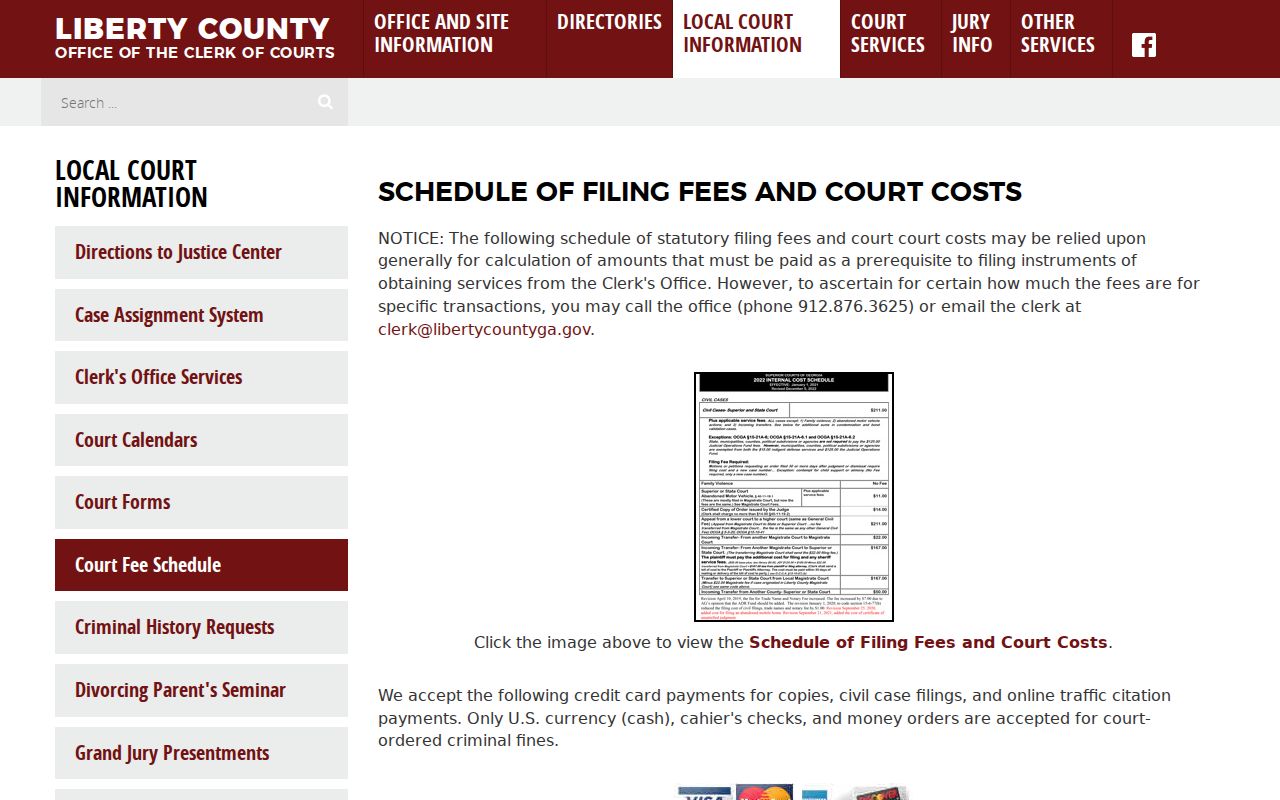
Ask the clerk to quote a price for the exact court record, format, court, and certification you want before you order.
Liberty Clerk of Courts Judicial Division
Liberty County Justice Center, Suite 1200
201 South Main Street, Hinesville, GA 31313
912-876-3625
Liberty Transcript Requests Differ
Do not confuse a transcript with a docket printout. A docket entry can note the date a transcript was filed. Yet the clerk does not prepare transcripts; a court reporter does. Liberty's public pages list no reporter rate and no standard request form. So contact the judge's office or the reporter directly. Ask about the proceeding date and the deposit. Ask the per-page or audio rate and when the finished product will be ready. Then check with the clerk on whether a completed transcript has landed in the case file. This distinction matters when an appeal entry pops up online. An entry shows activity, nothing more. It does not mean the full transcript is downloadable. Nor can the clerk produce one from the docket.
Sealed Records and Public Access
Georgia court files are open by default. Law or a court order can limit access. Uniform Superior Court Rule 21 governs those limits. Rule 21.6 covers protected identifiers plus material filed under seal. Juvenile and adoption files carry special confidentiality rules of their own. Even when a protected page or image is hidden, the public case header may stay visible.
The Georgia Open Records Act opens agency records wide, but it works differently for courts. The Attorney General explains that Superior, State, Probate, and Magistrate court files follow court-specific inspection and copying procedures. An administrative open-records request is no substitute for asking at the counter. Ask the clerk for the file instead. City administrative records, though, may go through a city request channel. The Georgia Attorney General's access explanation spells out that split.
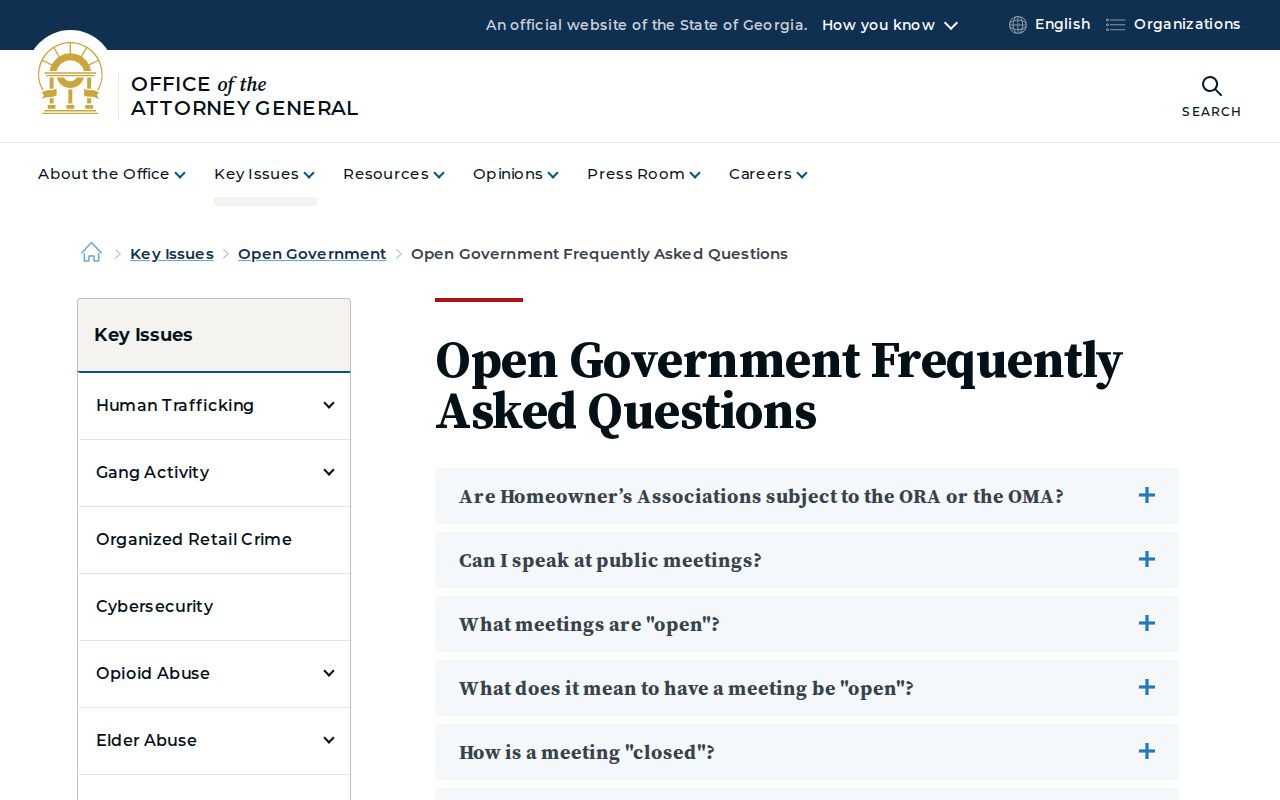
Sealed Records and Public Access: the guidance sends searchers straight to the court clerk and the rules that govern judicial files.
Key access rules: Uniform Superior Court Rules 21 and 21.6 support public access while allowing lawful sealing and protection of private identifiers. O.C.G.A. §§ 15-6-60.1 and 15-6-61 describe clerk custody and docket duties.
When Liberty Search Misses
Start with spelling variants, then confirm the court level. If that fails, use the clerk's public terminal, counter, phone, or email. Probate Court handles probate matters, and the issuing municipal clerk handles city cases. For eligible papers, ask whether eCertification is available. County or city administrative material is not a judicial case file. Use that agency's written records channel instead.
Be precise in what you ask for. It could be a docket sheet, a named judgment, a dated order, a plain copy, a certified copy, or a transcript. A narrow request beats a request for everything. That holds especially with an old or partly restricted file. Need help locating the case first? The county's Liberty County case lookup explains each search field.